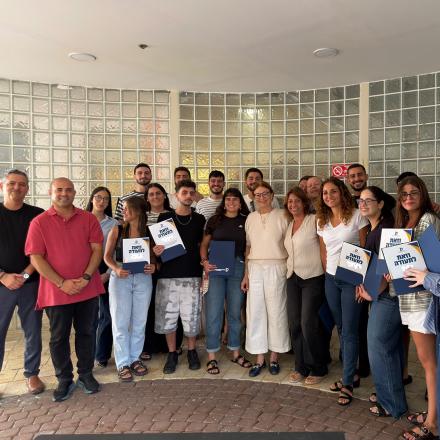
The lab will focus on developing and implementing AI-based solutions for practical clinical needs in ophthalmology. The launch event included a hackathon showcasing technological solutions to medical challenges identified by ophthalmology teams.
A new Applied Artificial Intelligence Lab was launched yesterday at the Innovation Center at Soroka University Medical Center, part of Clalit Health Services. The lab was established as part of a collaboration between SASI - Sapir Applied Science Institute and the Faculty of Technology at Sapir College, together with the Research Unit at Soroka’s Clinical Research Center and the Department of Ophthalmology.
The event, which included the signing of the collaboration agreement, was attended by Prof. Shlomi Kodesh, Director of Soroka; Prof. Nir Kedar, President of Sapir College; Dr. Gail Gilboa-Freedman, Dean of the Faculty of Technology at Sapir; Prof. Erez Tsumi, Director of the Department of Ophthalmology at Soroka; Nimrod Gutman, Director of SASI; Roy Warshavsky, Chief Scientist at SASI; as well as faculty members and representatives of the teams leading the initiative.
Of the 25 clinical and operational challenges identified by members of the ophthalmology team, five were selected for discussion during a hackathon held as part of the event, with the aim of developing potential solutions using artificial intelligence and other technological tools.
One of the challenges concerns young patients following surgery or those with complex medical conditions who are required to return for follow-up within a specific period but sometimes fail to do so. During the hackathon, participants explored a system that would identify patients who had not completed their follow-up and enable the medical team to prioritize them according to their level of risk.
Another challenge focuses on creating an additional layer of safety for intraocular injections. The proposed system would cross-reference information in the patient’s medical record with the summary of their most recent visit, helping the medical team verify which eye requires the injection and which substance should be administered, while identifying inconsistencies in the documentation.
Other solutions explored included a system to help ensure that patients complete the required tests before arriving at the clinic; an AI-based tool to help residents prepare for ophthalmology board examinations; and a system to support the classification of patients ahead of cataract surgery according to urgency, complexity, and type of anesthesia. The latter initiative, led by Dr. Yotam Lavi, an ophthalmology specialist, won first place in the hackathon.
The lab is designed to create a direct connection between challenges arising from the medical center’s day-to-day clinical work and research and development capabilities in artificial intelligence, engineering, and data science. In the future, faculty members and students from Sapir’s Faculty of Technology are also expected to take part in the lab’s activities and participate in projects developed in response to the needs of Soroka’s ophthalmology teams.
Prof. Erez Tsumi, Director of the Department of Ophthalmology at Soroka: “The connection between Soroka and Sapir College goes far beyond academic collaboration. Both institutions stood at the heart of the events of October 7 and the Swords of Iron War, and both chose to respond not only through recovery, but through growth, research, and innovation. The establishment of the AI lab within the Department of Ophthalmology embodies precisely this spirit – bringing together academic knowledge, data, and real needs arising from clinical practice in order to develop solutions that will improve the quality of medicine and patient care. For us, this is only the beginning of a shared journey.”
Prof. Shlomi Kodesh, Director of Soroka: “Innovation is a strategic value for us. Our leading medical teams are taking part in shaping the healthcare system of the future and advancing innovative solutions for the benefit of our patients. The collaboration with Sapir College is another significant step toward creating the breakthroughs of tomorrow. Sapir and Soroka are two major institutions in the Negev, and our shared mission is to harness knowledge, people, and ideas to drive progress and, together, transform and improve healthcare, making it better and more precise for the benefit of the residents of the Negev.”
Prof. Nir Kedar, President of Sapir College: “The collaboration between Sapir College and Soroka University Medical Center is an exciting and natural connection between two leading institutions. Bringing together Sapir’s capabilities in data science and artificial intelligence with Soroka’s advanced medical expertise and innovation will help address the healthcare challenges of tomorrow. I wish us all great success in this joint initiative and am confident that its will contribute to society and medicine far beyond the borders of the Negev.”
Dr. Gail Gilboa-Freedman, Head of the Faculty of Technology at Sapir College: “The handshake between Prof. Nir Kedar and Prof. Shlomi Kodesh symbolizes, in my view, what is happening in the Negev today: technological growth, uncompromising excellence, and partnerships that connect academia with the region. Beyond recovery, we are choosing to grow. The joint lab is an example of how leading institutions in the Negev can grow together and create a hub of excellence.”
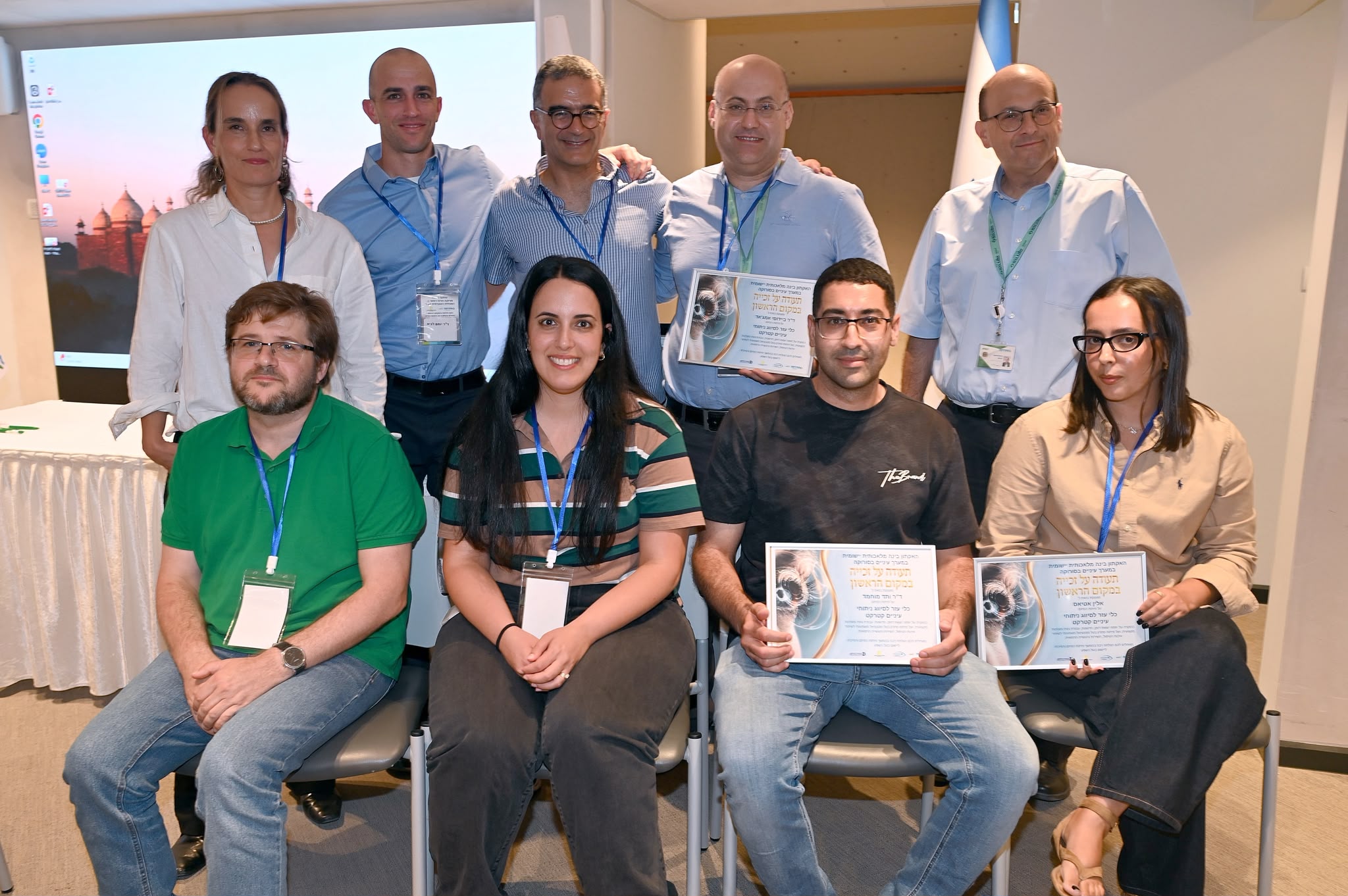
The team led by Dr. Yotam Lavi, which won first place in the hackathon held during the launch of the AI Lab, together with Prof. Shlomi Kodesh, Director of Soroka, and Dr. Gail Gilboa-Freedman, Head of the Faculty of Technology at Sapir College.
Photos: Soroka Spokesperson’s Office
More News
Congratulations to Dr. Sagit Kedem-Yamini